Traceability
Food Safety and Quality Assurance
Environmental Responsibility
Social Responsibility

Sourcing meets stewardship

Founded on a love for the oceans and their vast and infinitely complex ecosystems, Mark Foods is dedicated to maintaining the healthy abundance of the habitats we source from. We work tirelessly across our supply chain to ensure the products we source are traceable, ethically sourced, and environmentally responsible.

Traceability

As an MSC Chain of Custody-certified supplier, we prioritize transparency at every stage of the supply chain, ensuring our seafood is fully traceable back to its source. From harvest to delivery, whether wild-caught or farm-raised, customers can trust in the integrity, origin, and handling of every product sourced from Mark Foods.

Our traceability program follows each item from its point of origin through every step of the journey, supported by trusted supplier partnerships and detailed data capture. This rigorous oversight guarantees consistent quality, food safety, and accountability from catch to customer.

VESSEL
OR FARM
transport
to processing
processing
facility
transport
to storage
storage
distribution
to customer

Food Safety and Quality Assurance

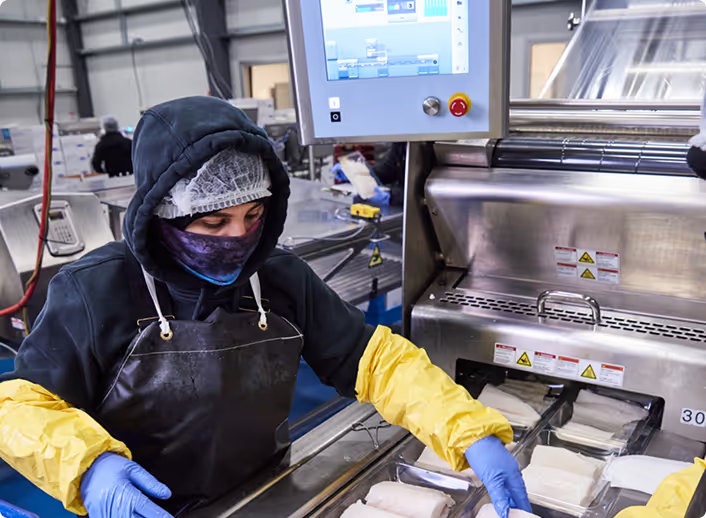
The health and safety of seafood consumers is our highest priority. To that end, we uphold rigorous standards of food safety across our supply chain. Our food safety and quality assurance programs are constantly evolving to incorporate the latest industry standards, regulatory requirements, and scientific research.

Whether wild-caught or responsibly farmed, our seafood consistently delivers on our commitment to freshness, transparency, and excellence.

Our standards

HACCP Standards at the Core of Every Process

Our processor-partners operate under strict HACCP protocols and meet or exceed global requirements, with systems in place to identify and control potential risks.

01

Conduct a hazard analysis

02

Determine the critical control points (CCPs)

03

Establish critical limits

04

Establish monitoring procedures

05

Establish corrective actions

06

Establish verification procedures

07

Establish record-keeping and documentation procedures

Unbroken Cold Chain and Certified Processing

From catch to delivery, we maintain rigorous cold chain controls, full traceability, and process all seafood in certified plants to ensure product integrity.

Rigorous Supplier Approval and Verification

Through our supplier approval program, we verify and document that every partner maintains robust food safety programs, auditing regularly to ensure they meet our strict safety and quality requirements.

Expert QA Teams Ensuring Safety and Quality

Our partners employ experienced quality assurance teams that monitor every step of the process, with unparalleled commitment to product safety and quality.

Learn more about our standards:

NOAA
NSSP
FDA HACCP
GFSI

Environmental
Responsibility

Our responsible
sourcing approach

At Mark Foods, our commitment to ethical and responsible sourcing guides every decision we make. That's why we partner with fisheries, processors, government agencies, and NGOs that lead the industry in science-based practices to ensure that fisheries and the communities they support achieve long-term success.

Pioneering fishery regulation

Chilean Sea Bass, once vulnerable to illegal fishing, is now a model of sustainable management. Through global cooperation and strict oversight, the fishery has become one of the world’s most tightly managed.


As the largest U.S. supplier and processor of MSC-certified Chilean Sea Bass, we work alongside COLTO, MSC, and CCAMLAR to ensure responsible harvests and protect healthy Chilean Sea Bass populations for generations to come.

Our Guiding Principles

Environmental Impact

Mark Foods works with suppliers, NGOs, governments, fisheries, and aquaculture operations to minimize impact on the environment. Bycatch, environmental degradation, and pollution are all factors we seek to mitigate through adjusting fishing practices, monitoring quotas, and encouraging data collection. This is an ever-evolving process.

Community Impact

Mark Foods suppliers undergo strict third-party audits for social compliance to ensure all international and local labor laws are enforced. We strive for all partners within our supply chain to pay competitive wages to their employees.

Food Safety and Traceability

Mark Foods is proud of what goes into our brands, and our customers’ brands. Our packers grade raw material upon receipt and reject fish that doesn’t meet our specifications. Every product is fully traceable back to the vessel or farm, and we engage third party auditors to ensure compliance.

Memberships and Partnerships

Beyond certifications, we work closely with leading institutions to ensure our practices align with evolving environmental and regulatory standards and that every decision we make considers future generations and the health of our oceans.

Fishery Improvement Project (FIPs)

We actively engage in and source from Fishery Improvement Projects (FIPs) across the world. FIP progress is monitored through FisheryProgress.org, where each project is reviewed against globally recognized standards and required to report updates every six months.

Global partnerships map (mobile)
Direct Participation
Supplier Participation
Industry group Participation

Social Responsibility

Committed to communities

We are committed to sustaining the communities and economies we work within. Through strong partnerships with fisheries, cooperatives, and producers around the world, we support ethical labor practices, fair wages, and sustainable livelihoods. By investing in people, and not just products, we help foster long-term resilience for both coastal communities and the seafood industry as a whole.

BAP-Certification

Best Aquaculture Practice (BAP) Standards include Social Accountability compliance from suppliers including (but not limited to) maintaining community access to public resources, farm appearance, community engagement, required minimum wages, working hours, voluntary labor, anti-discrimination, and ensuring worker health and safety.

FIP Participation

Fishery Progress requires all FIPs to comply with a Human Rights and Social Responsibility Policy or equivalent. This includes comprehensive risk assessments, social workplans and progress updates, grievance mechanism insights, and evidence of rights efforts. There are also additional requirements for high-risk FIPs in contexts of forced labor and human trafficking.